Mimaki UCJV300-160 64" UV Printer/Cutter
Overview
64" UV Print & Cut with 4- and 5-Layer Capability
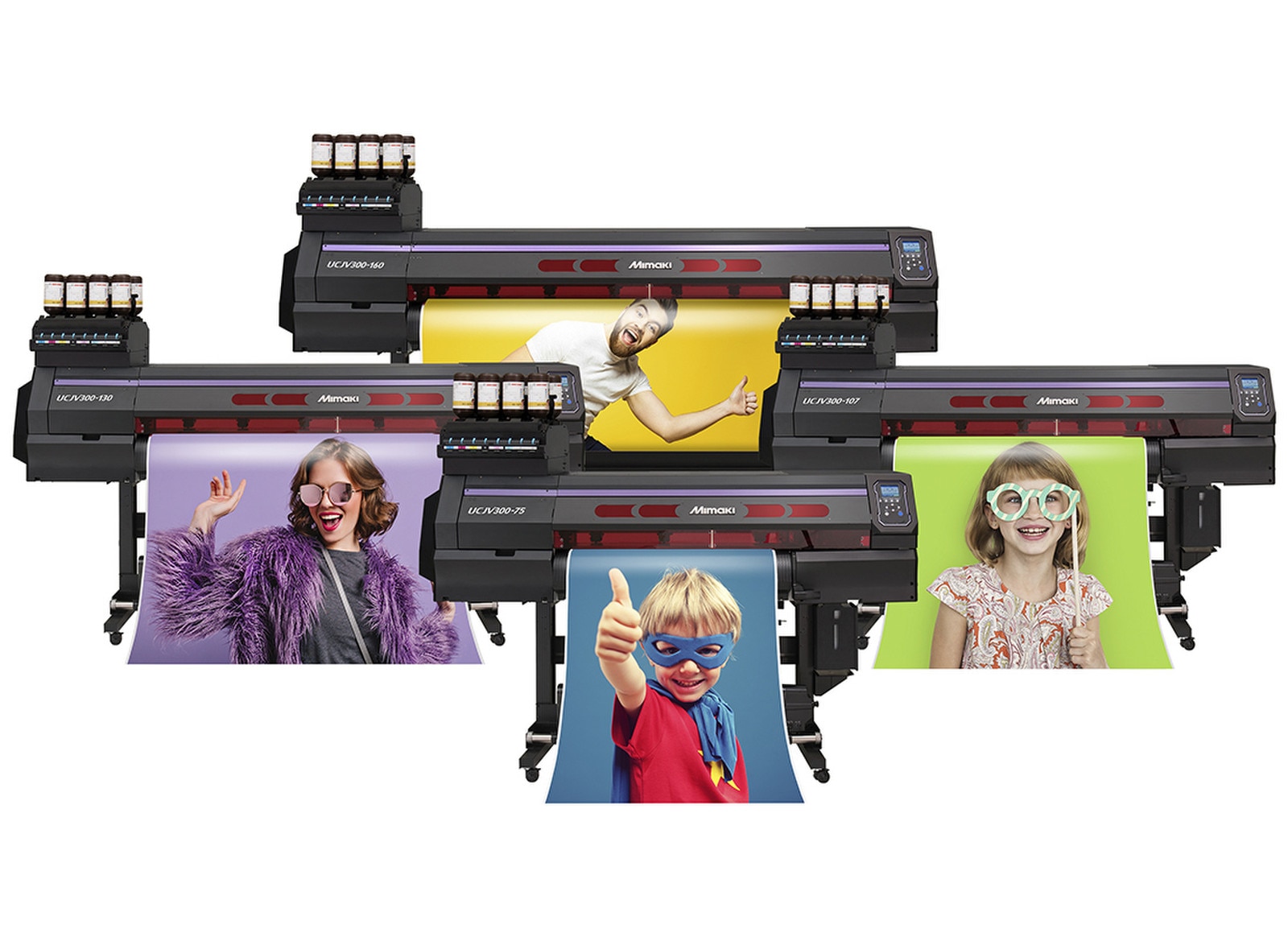
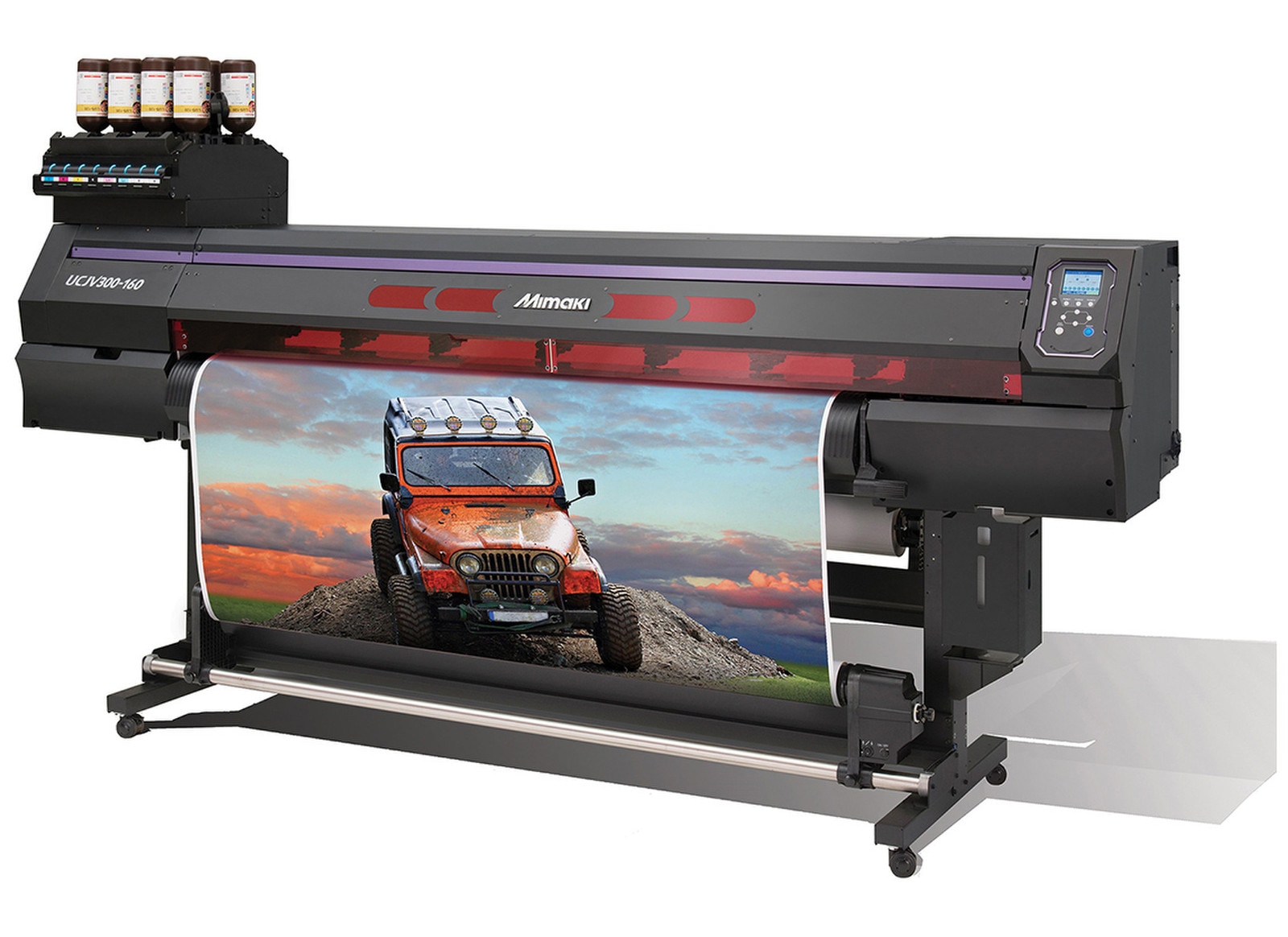
The Mimaki UCJV300-160 is a 64" UV-LED roll-to-roll printer with an integrated cutter, built around one capability that conventional printers can't match: multi-layer printing.
Running up to seven colors, it produces four- and five-layer output — sandwiching white ink between images so a single printed sheet shows one design in reflected light and a completely different one when backlit. UV ink cures instantly, so contour cutting begins the moment printing ends, and the whole job finishes on one machine.
Key Features
- 64" print and cut – Print and contour cut on one device, with no drying wait between the two
- 4-layer and 5-layer printing – Day-and-night graphics that change image entirely under backlighting
- Up to seven colors – Extended ink set including White and Clear for layered and specialty work
- Instant UV-LED curing – Prints are dry on the platen — cut, laminate, or install immediately
- Speeds to 278 sq ft/hr – Production throughput for commercial sign and display work
- ID Cut support – Barcode-driven job identification for automatic continuous cutting
- Integrated contour cutting – Proven Mimaki cutting with automatic registration mark detection
- Clear ink effects – Spot gloss, matte contrast, and textured finishes that raise perceived value
- RasterLink and FineCut included – Full RIP and cutting software for the print-and-cut workflow
Day-and-Night Graphics
Multi-layer printing is the reason shops buy this machine. A five-layer build prints an image, lays down white ink as a blocking layer, then prints a second image on the reverse side of that block. Lit from the front, the viewer sees the first design; lit from behind, the white blocks the front image and the second one appears. One printed sheet, two complete graphics. Retail lightboxes, restaurant menu displays, and transit advertising all use it to double the content of a single installation — and very few printers in this class can produce it.
UV Print & Cut Advantages
- No drying delay – UV ink cures on contact, so cutting starts immediately rather than the next morning
- Broader substrate range – UV ink adheres without a receptive coating, including on films and specialty media
- Single-device workflow – Print and cut without moving media between machines or losing registration
- White ink – Print on clear and dark media for window graphics and backlit work
- Low odor – No solvent evaporation, suitable for shops with limited ventilation
- Durable finish – UV-cured output resists scratching and fading for indoor and outdoor installs
Applications
Ideal for backlit and day-and-night signage, retail lightbox displays, window and store graphics, decals and die-cut stickers, labels and product marking, point-of-purchase displays, menu boards, transit and exhibition graphics, and short-run packaging mockups.
Why Choose the Mimaki UCJV300-160?
The UCJV300-160 earns its place on layered printing. Day-and-night graphics are a genuinely differentiated product that most sign shops can't offer, and they command pricing to match. Combined with instant UV curing, integrated cutting, and a seven-color ink set, it turns a 64" print-and-cut footprint into a higher-margin capability.
Specifications
| Specification | UCJV300-160 |
|---|---|
| Device Type | UV-LED roll-to-roll inkjet printer with integrated cutter |
| Max Media Width | 64" (1.6 m) |
| Max Print Speed | Up to 278 sq ft/hr (25.8 m²/h) |
| Ink Configuration | Up to 7 colors including White and Clear |
| Layer Printing | 4-layer and 5-layer printing supported |
| Curing | Instant UV-LED cure — no drying or outgassing period |
| Cutting | Integrated contour cutting with automatic registration mark detection; ID Cut supported |
| Core Technologies | Variable Dot Technology, Mimaki Advanced Pass System, Nozzle Check Unit, Nozzle Recovery System |
| Included Software | RasterLink RIP and FineCut cutting software |
| Ink Note | Configured for a single ink type; changing ink families requires full system flushing per Mimaki procedure |
Literature
 |